Brazilian Jiu-Jitsu turns the chaos of city life into a clear, repeatable practice for strength, calm, and confidence.
New York runs fast, and the body keeps score. Long commutes, desk hours, crowded sidewalks, and constant problem-solving can leave you feeling wired but tired, strong but stiff, social but oddly disconnected. We built our training to meet that reality head-on, not with vague wellness promises, but with a practice you can feel working week to week.
Brazilian Jiu-Jitsu fits NYC urban wellness because it bundles several needs into one hour: a full-body workout, a focus-heavy mental reset, real self-defense skills, and a community that actually learns your name. If you have limited time and a lot on your plate, that combination matters.
In this guide, we’ll break down how BJJ supports balance in city life, what you can expect as a beginner, and how our adult and youth programs fit into busy New York schedules without making training feel like another chore.
Why Brazilian Jiu-Jitsu feels like a wellness system for busy New Yorkers
Most fitness plans focus on one thing at a time: cardio, strength, mobility, or stress relief. On the mats, those pieces overlap naturally. You’re moving, thinking, adapting, and regulating your breathing in real time, which is a big reason many students describe training as both energizing and grounding.
We also like that Brazilian Jiu-Jitsu rewards consistency more than “natural athleticism.” In NYC, plenty of people start with tight hips, stressed shoulders, and a brain that never fully shuts off. Training gives you a structured way to unwind without zoning out. You have a job to do in every round, and that job pulls your attention into the present.
Over time, the benefits show up in everyday moments: standing taller on the subway, feeling more capable walking home, and noticing you recover from stressful days faster than you used to.
The physical side: full-body fitness you can’t fake
BJJ is sneaky conditioning. You might come in thinking it’s mostly arms, but it quickly becomes clear that your legs, core, back, and grip all have opinions. We train movements that build strength and endurance in positions that demand coordination and balance, not just raw effort.
Because grappling is dynamic, you’re also developing athletic qualities that many NYC adults miss after school sports end: timing, body awareness, and the ability to generate force while staying stable. That stability carries over into daily life, especially if you spend hours seated and then suddenly have to sprint for a train.
Here’s what students commonly notice after a few months of consistent training:
• Stronger core control for posture, lifting, and long workdays without feeling folded in half
• Improved mobility in hips and shoulders from repeated, coached movement patterns
• Better balance and coordination, especially during transitions and scrambles
• Higher work capacity, meaning stairs, bags, and long days feel more manageable
• Practical conditioning that’s engaging enough to stick with, even when motivation dips
We keep progress sustainable by pairing technique with appropriate intensity. You can train hard without turning every session into a test of survival.
Mental clarity: stress relief through focused problem-solving
NYC stress is rarely one big thing. It’s a stack: deadlines, noise, screens, crowded spaces, and a constant sense that you should be doing something else. One of the most useful parts of training is that it forces a clean mental boundary. When you’re learning a guard pass or defending a position, multitasking disappears. Your phone is off, your attention is narrow, and your body has a clear mission.
Brazilian Jiu-Jitsu also teaches emotional regulation in a very practical way. You’ll get uncomfortable positions, you’ll feel pressure, and you’ll learn how to breathe, frame, and think anyway. That skill translates. The point isn’t to become “tough” in a performative way. The point is to stay functional under stress.
A lot of students tell us the best part of class is the after: that quiet, steady feeling when your mind stops racing for a while. It’s hard to replicate that with a treadmill.
Confidence that comes from real competence
Confidence is often marketed like a mindset trick. We treat it as a byproduct of competence. When you repeatedly practice how to escape, stabilize, and improve position, you start trusting your decision-making. That matters in training, but it also matters in the rest of your life, from work conversations to personal boundaries.
In BJJ, you get feedback immediately. A technique works, or it doesn’t, and then we adjust the details. That loop builds a kind of grounded confidence: less “I hope I can handle things” and more “I’ve handled hard things before, and I know how to learn.”
We also keep the room structured so you can build skills without feeling thrown into the deep end. Progress is real, but it’s progressive, and that’s the difference between a practice you quit and a practice you keep.
Practical self-defense for real life in New York
Urban self-defense isn’t about winning fights. It’s about options: awareness, distance management, and the ability to control or escape if something goes wrong. Brazilian Jiu-Jitsu is especially relevant because it focuses on clinch and ground scenarios, where size and strength differences often matter most.
We teach you how to:
• Maintain base and balance when someone is pushing or grabbing
• Control posture and distance so you can stay safer and think clearly
• Escape bad positions and create space to disengage
• Use leverage and technique rather than relying on brute force
Training also builds a calm relationship with contact. That doesn’t mean you want conflict. It means you’re less likely to freeze if an unexpected situation happens, which is a big deal in a dense city.
We keep self-defense training responsible: controlled practice, clear coaching, and partners who understand the goal is skill-building, not ego.
Community in a city that can feel oddly isolating
New York is full of people, but adult friendships can be hard to build. Schedules don’t match, everyone’s tired, and social plans drift. A consistent training routine solves part of that simply by putting you in the same room with the same people, working on the same hard thing.
On the mats, you learn each other’s pace, your favorite positions, and your small wins. You help each other improve, and that creates real connection without forced small talk. Some days you’ll chat, some days you’ll just train and nod, and honestly, both are valid.
We pay close attention to culture because the environment matters as much as the curriculum. When training partners respect each other, you can push yourself without feeling on guard in the wrong way.
Starting as a beginner in NYC: what your first class actually feels like
If you’re new, it’s normal to worry about being “behind,” out of shape, or not knowing what to do. Our job is to make the on-ramp clear. You don’t need to get in shape first. Training is how you build conditioning, mobility, and confidence.
A typical first class includes a warm-up that prepares you for grappling movement, a technique segment where we focus on a few core ideas, and partner drills that help you feel the position. Depending on the class, you may also do controlled sparring, but we scale intensity and expectations to your experience.
To make your first day smoother, here’s a simple checklist:
1. Wear comfortable training clothes and bring water and a small towel
2. Arrive a little early so we can orient you to the space and what to expect
3. Focus on one goal: learn the position and stay relaxed, even if you feel clumsy
4. Tap early and often if you feel stuck, pressured, or unsure
5. Ask one question after class so we can point you to the next step
You’ll probably sweat, you’ll probably laugh at least once, and you’ll leave with a few details you can actually remember. That’s a good first day.
Fundamentals, no-gi, and building skill without overwhelm
NYC schedules are unpredictable, so we structure training to be repeatable and easy to plug into. Fundamentals matter because they give you answers in the positions you hit most often. Instead of collecting random techniques, you’re building a framework: posture, base, pressure, and timing.
No-gi training can feel faster because grips change and movement becomes more dynamic. Gi training can slow the pace down and sharpen control. We coach both in a way that supports long-term progress, not just short-term intensity.
The bigger idea is balance: enough challenge to grow, enough structure to stay safe, and enough clarity that you know what you’re working on when you show up.
Youth Brazilian Jiu-Jitsu in New York: wellness for kids and teens, too
For families, wellness looks different. Kids need movement, structure, and confidence, and teens need a place to build identity and resilience without constant screen pressure. Youth Brazilian Jiu-Jitsu in New York is one of the most practical activities for that mix because it blends coordination, discipline, and social learning in a hands-on format.
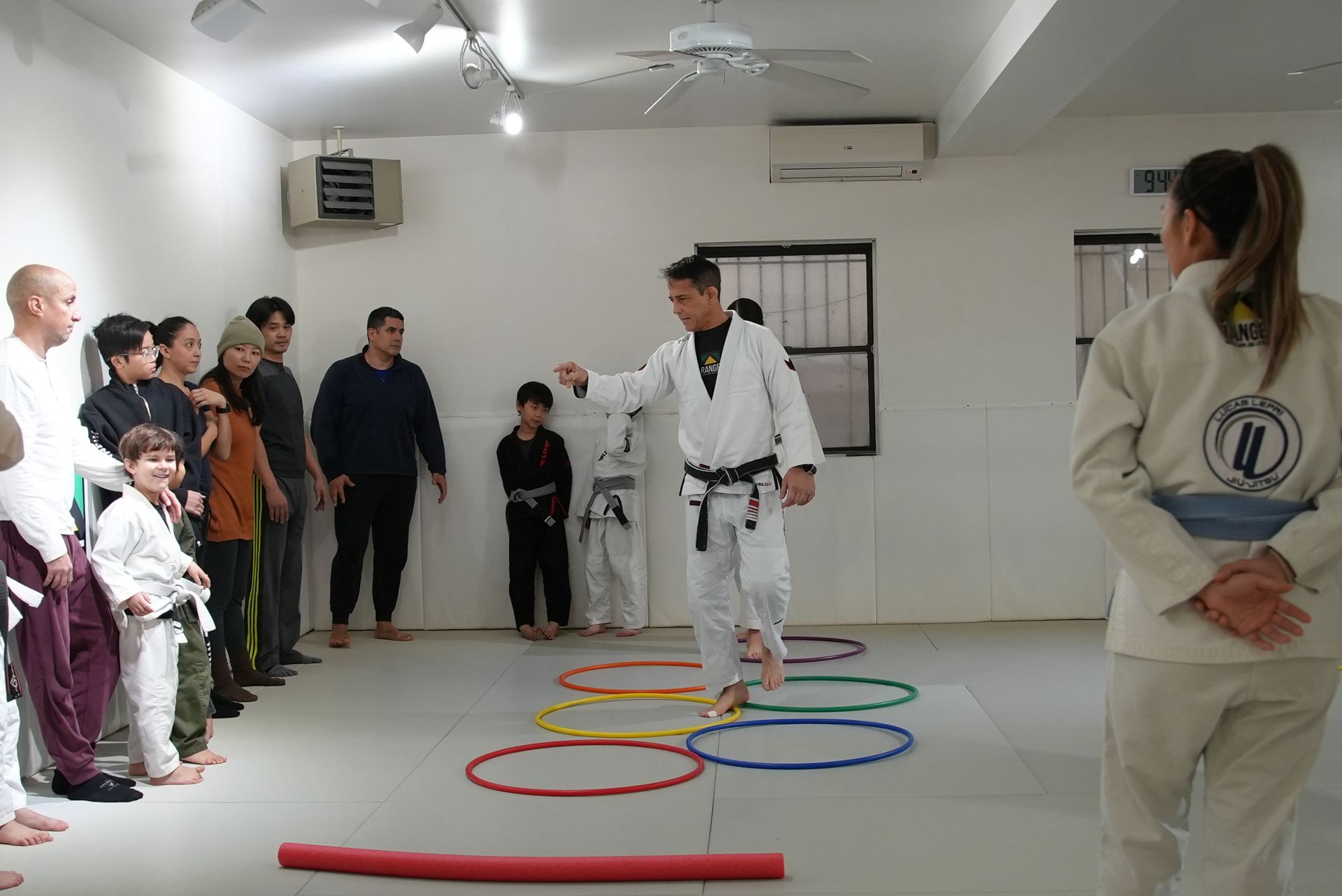
In our youth classes, we focus on age-appropriate skills: body control, listening, teamwork, and the ability to stay composed when something feels challenging. We keep it engaging and positive while still teaching real technique. The goal is not to create mini-adults or tiny competitors. The goal is to help kids grow into capable humans.
Parents also appreciate that progress is visible. Better posture, calmer focus, more confidence speaking up, and a healthier relationship with effort tend to show up over time, especially when training becomes part of the weekly routine.
Making training work with commutes, work hours, and real NYC life
Consistency is the secret, but consistency has to be realistic. We design our class schedule to support busy adults and families, and we encourage a training rhythm you can maintain even when work gets intense.
A simple approach that works for many New Yorkers is:
• Two classes per week to build momentum and retain technique
• Short mobility work on off-days to keep hips and shoulders happy
• One rest day that is actual rest, not “rest but stressed”
If you travel, work late, or juggle parenting, we’ll help you plan around what’s real rather than what looks perfect on paper. This is training for your life, not training that requires you to pause your life.
Take the Next Step
If you want a practice that builds fitness, stress tolerance, and real capability at the same time, our approach at Range Brazilian Jiu-Jitsu NYC is designed for exactly that. We use Brazilian Jiu-Jitsu as a practical wellness system: structured training, progressive coaching, and a culture that supports long-term growth.
Range Brazilian Jiu-Jitsu in New York also means you can train for what matters in this city: feeling balanced in your body, steady in your mind, and confident in your ability to handle pressure, on and off the mats.
Put these techniques into practice by joining a Brazilian Jiu-Jitsu class at Range Brazilian Jiu-Jitsu NYC.